Every so often, someone will tell you that money is the root of all evil. It’s one of those lines repeated so often, in motivational talks, in passing conversation, in warnings parents pass down to their children, that most people accept it as truth. It isn’t, and the Bible never actually said it was. What it actually says is: “For the love of money is a root of all kinds of evil” (1 Timothy 6:10). That’s the accurate verse, but on its own it only gives us half the picture. The fuller picture is this: the love of money has caused a lot of the evil in this world. People have lied, stolen, cheated, and destroyed one another in pursuit of it. But there is a force even more powerful than the love of money in producing bad decisions, poverty, and ruin. That force is lack, or rather, the focus on it.
A Garden of Plenty 🌳
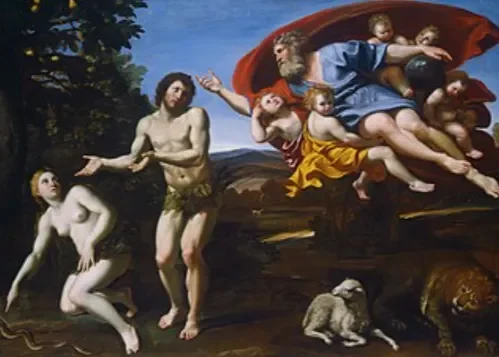
Take one of the oldest stories we have: the creation account in Genesis. God makes mankind in his own image. The first man is Adam, and he’s told to be fruitful, to increase, to subdue the earth and have dominion over it. Then comes the one boundary: “You are free to eat from any tree in the garden; but you must not eat from the tree of the knowledge of good and evil, for when you eat from it you will certainly die” (Genesis 2:16-17). Everything is given freely, every tree, and only one is set apart.
By Genesis 3, the serpent enters the story, and his strategy is worth studying closely. He does not attack what Eve has. He redirects her attention to what she does not, the one tree she was told not to eat from, even though she is surrounded by total abundance, lacking nothing at all. Her focus shifts from everything she has to the one thing she doesn’t, and that shift in focus is the doorway through which the trouble enters.
I believe this is, in large part, why the rich get richer and the poor get poorer: it comes down to what people choose to focus on. I am not talking here about systemic poverty. There are real, structural barriers and circumstances beyond anyone’s control that contribute to poverty, and those exceptions matter. But as a rule of thumb, rich people think differently than poor people, and what they have is largely a reflection of how they think. Their resources follow their focus.
Buried Potential 🪙
Consider the parable of the talents in Matthew 25. A master entrusts three servants with five talents, two talents, and one talent (a talent being a large sum of money), each according to his ability. The servants with five and two go to work immediately, and both double what they were given. The servant with one does something different: he digs a hole and buries it. When the master returns and asks for an account, that servant explains himself in the language of lack and fear: he was afraid, so he hid what he had. The master’s response is severe: he calls him wicked and lazy. And the one talent that servant had been focused on protecting is taken from him and given to the servant who now has ten.
Brian Tracy calls this the law of substitution: the conscious mind can only hold one dominant thought at a time, so whichever one occupies it crowds the other out. His observation is that rich people spend most of their mental energy on wealth, opportunity, and what’s possible, while poor people spend theirs on danger, risk, and failure. That’s the one-talent servant exactly. His mind was occupied by everything he stood to lose, so there was no room left for what he could have gained.
Where Attention Goes 🎯
That is the pattern, over and over: your energy flows where your attention goes. When people focus on lack, they get lack. When they focus on abundance and opportunity, they start turning problems into solutions, and solutions create value, value creates resources, and resources compound into wealth. It is worth asking yourself honestly: what if you already have what you need, but you are focused on the wrong thing?
Genesis 21 tells the story of a woman in the Bible called Hagar, alone in the desert with her son, out of water, and sure she was about to watch him die. She sits some distance away because she cannot bear to look. And then: “God opened her eyes and she saw a well of water. So she went and filled the skin with water and gave the boy a drink” (Genesis 21:19). The well hadn’t just appeared. It had been there all along. What changed was her ability to see it.
Five Loaves, Two Fish 🍞
There’s a similar moment in the Bible, when Jesus feeds a crowd of thousands with just five loaves of bread and two fish, all a young boy had with him (Matthew 14:13-21). Jesus doesn’t focus on how little it is. He takes what’s there, gives thanks for it, and it becomes enough, not just for the crowd, but with baskets left over. Gratitude comes first. The increase follows it.
That same order is the real answer to why the rich get richer and the poor get poorer. It was never only about what people have access to. It’s about what they choose to see, and how they respond to it. Gratitude for what’s already in your hand gives you the perspective to build with it, rather than the fear that buries it. As the proverb says, ‘As a man thinketh in his heart, so is he’ (Proverbs 23:7). Change what you focus on, give thanks for what’s in your hand, and you change your position.