
£1.98 trillion. That’s how much cash UK households are currently sitting on, according to the Bank of England, including £1 trillion sitting in ordinary bank accounts. It’s an eye-watering sum. And yet ask most people how their savings are going, and most won’t feel good about it.
That’s because the trillion-pound headline hides two very different problems living side by side. Plenty of people don’t have anywhere near enough set aside to feel secure if something goes wrong. Meanwhile, others have money sitting around that isn’t doing anything for them. Fixing either one starts the same way: getting intentional with your money, rather than leaving it on autopilot. Here’s how UK adults are using their money in 2026, and where you might fit in.
💷 How much does the average person actually have saved?
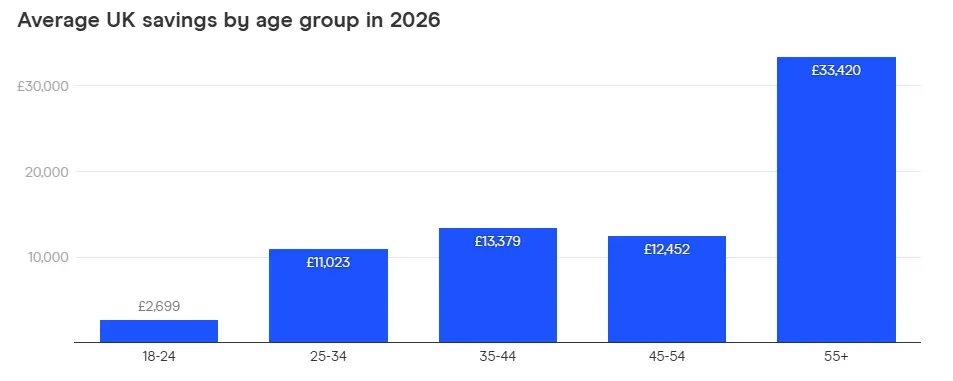
The average UK adult had £19,214 in savings in 2026, according to a Finder survey. But that figure is skewed by the over-55s, who tend to have more cash after decades of saving, paying off their mortgage, and nearing retirement. Strip them out, and the average for everyone under 55 drops to £9,888.
Broken down by age, it looks like this:
Age group
But averages hide something more serious: how little financial resilience many UK adults actually have.
39% of UK adults have £1,000 or less in savings
25% have £200 or less
16% (around 8.9 million people) have no savings at all
So where do you land: short on a buffer, or holding cash that could be working harder? Either way, the starting point is the same: build a proper safety net, and make sure it’s actually earning what it should.
🛟 Build your safety net in a high-interest cash ISA
Before you think about investing, you need a foundation first: an emergency fund. The general rule of thumb is three to six months of essential expenses in an easy-access account.
Where you land in that range depends on your situation:
If you’ve got a second income in the household, or a stable, in-demand job, three months is probably enough.
If you’re the sole income earner, self-employed, or in a less secure industry, aim for six months.
Once you know your number, the next question is where to actually keep it. For most people, the answer should be a top-paying cash ISA, not just whatever savings account your bank defaults you into. Interest on a cash ISA is completely tax-free, and, as long as you pick an easy-access cash ISA, you can still get to it whenever you need it.
Worth knowing too: from April 2027, the annual cash ISA allowance for under-65s is being cut from £20,000 to £12,000, as the government tries to nudge more people toward investing rather than cash.
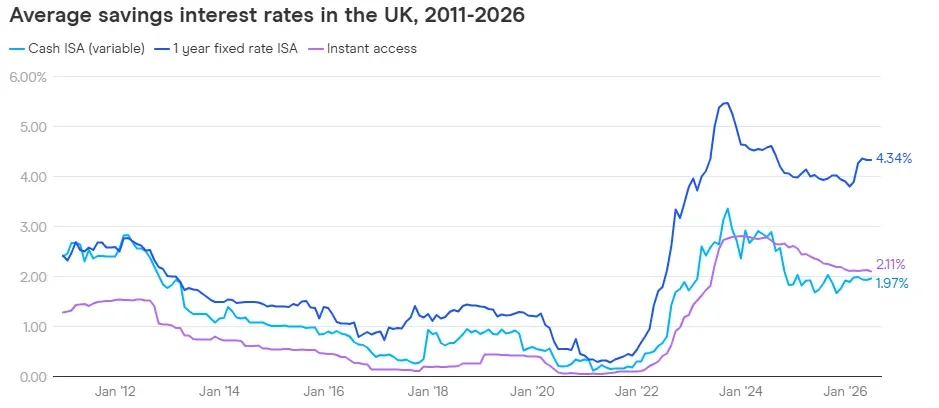
32% of UK adults, around 17.5 million people, already have a cash ISA. But most are earning far less interest than they could. As of July 2026, the average variable cash ISA paid just 1.97%, while instant access accounts averaged 2.11% and a 1-year fix averaged 4.34%. The gap isn't really about locking your money away, either: if you check a comparison website, you can find easy-access cash ISAs paying over 4% right now. Most people are simply stuck on whatever rate their bank happened to give them. Only 1 in 10 cash ISA holders have switched to a better-paying provider in the past three years, and that alone can cost hundreds of pounds a year in lost interest. Building the fund is only half the job. Checking your rate once a year is the other half.
Once your fund is built, though, holding more cash than that stops being “safe” and starts being a missed opportunity.
🚀 The power of investing: same money, very different outcome
That's where investing comes in: not a get-rich-quick move, but the most practical way to build real wealth over time, alongside a cash ISA doing its job for money you need soon.
Say you save £200 a month for 20 years. Here's roughly how that plays out in a savings account versus a global equity index tracker, using long-run average returns: 2% for cash, 7% for a global equity index. In reality, the return in any single year could be much higher or lower than that:
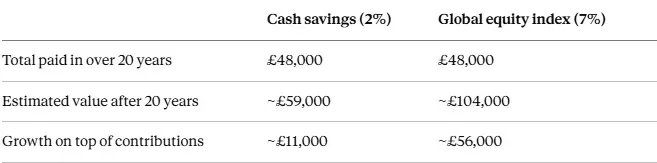
Nearly double the outcome, just from where the money sits. That’s the power of time and compounding doing the work for you, rather than you trying to out-earn or out-save your way there.
🤔 So why aren’t more people doing this?
Ask most people why they’re not investing and the answer usually isn’t “I don’t believe in it.” It’s “I don’t know where to start.” The sheer number of platforms, funds, and options out there is genuinely overwhelming, and that’s often enough to make people do nothing at all, which is the worst thing you can do.
Here’s the good news: you’re not trying to compete with, or become, a professional investor. Plenty of people do that as a full-time job, and most still don’t beat the market consistently over the long run. For almost everyone reading this, a low-cost global equity index tracker is a perfectly sensible place to start, and all most people will ever need. It spreads your money across thousands of companies worldwide, costs very little to hold, and requires no ongoing decisions from you.
In short, you’re trying to:
Beat inflation, so your money doesn’t quietly shrink in real terms
Prepare for retirement, starting as early as you can afford to
Let time do the heavy lifting, instead of you
Get those three things right, and you’re ahead of most people, including plenty who think they’re “good with money” simply because they have a healthy savings balance.
Want help putting this into practice? Join my free Money Made Clear session tomorrow at 8pm, where I’ll break down why so many people struggle with their money, why saving and investing feels so hard to structure, and how you can start making better money decisions. Drop me a note and I’ll send over the details