What the Budget means for your money, and why lasting financial security requires more than government support
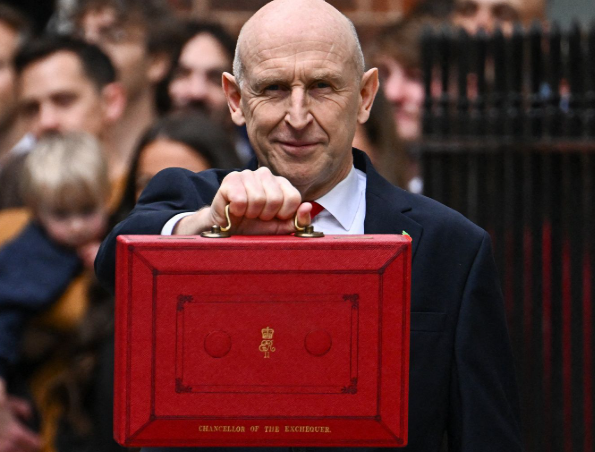
On Wednesday, Chancellor John Healey delivered the 2026 Autumn Budget, announcing changes to energy bills, savings, pensions, housing and support for entrepreneurs.
There are some positive announcements in this Budget, and it’s clear the government is trying to ease the pressure on household finances.
But the bigger question is whether these measures will make a meaningful difference to people’s spending power and quality of life.
After all, temporary relief on household bills and higher wages can help, but their impact may be limited if everyday living costs continue to rise.
The announcements also reminded me of something important about managing our money.
Government policies can change, sometimes affecting financial decisions we’ve already made.
That’s why I believe it’s important to build our finances around lasting principles, rather than relying too heavily on policies that may change.
Ecclesiastes 11:2 puts it this way “But divide your investments among many places, for you do not know what risks might lie ahead.”
For me, this speaks to the importance of diversification and preparing for uncertainty.
And this Budget provides a useful example of why that matters.
So, what’s changing, and what does it mean for your money?
🏠 1. Household Bills: Relief Today, Higher Costs Tomorrow?
The Budget includes several measures intended to ease pressure on household finances.
£100 Household Energy Payment: From January 2027, eligible households in England in council tax bands A to D will receive £100 through the council tax system.
Electricity VAT: The temporary reduction from 5% to 0% has been extended until July 2027.
Gas standing charges: The government has asked Ofgem to remove these by the end of 2027, or as soon as possible afterwards.
A standing charge is the fixed daily amount you pay regardless of how much gas you use.
However, the costs are expected to move into the price per unit of gas, meaning higher-usage households may benefit less.
Fuel duty: The temporary 5p-per-litre reduction has been extended until July 2027, when it is scheduled to be reversed alongside an inflation-linked increase.
These measures offer some relief, but energy prices remain a concern.
The January 2027 energy price cap has not yet been confirmed, although industry forecasts suggest households could face a significant increase.
Should you switch energy providers?
If you’re currently on a standard variable tariff, I’d encourage you to compare fixed-rate deals before January.
A fixed tariff could protect you against further increases, but it isn’t automatically cheaper.
Compare unit rates, standing charges, contract length and exit fees against your current deal.
The aim isn’t simply to switch providers. It’s to understand whether you could reduce your costs or gain greater certainty over your bills.
💷 2. Wages Are Rising, But So Are Taxes
From April 2027, the National Living Wage for workers aged 21 and over will rise from £12.71 to £13.21 an hour, an increase of 3.9%.
For someone working 37.5 hours a week, that’s approximately £975 more annually before tax.
Minimum wage rates for younger workers and eligible apprentices will also increase.
But income tax thresholds remain frozen until April 2031.
The standard personal allowance stays at £12,570, while the higher-rate threshold remains at £50,270 in England, Wales and Northern Ireland.
This creates what’s known as fiscal drag.
As salaries rise but tax thresholds remain unchanged, more of your income can become subject to tax, including at higher rates.
Increasing wages is positive, but a pay rise doesn’t necessarily mean you’re better off.
If your salary increases by 3% while your living costs rise by 4%, your purchasing power has fallen.
💰 3. Cash ISAs: Another Government U-Turn
One of the biggest announcements was the reversal of the planned reduction in the cash ISA allowance.
The previous government had proposed cutting the annual limit from £20,000 to £12,000 for people under 65.
The aim was to encourage more people to invest rather than hold their money in cash.
I wasn’t convinced by that approach.
Encouraging investment is important, but restricting people’s ability to save isn’t necessarily the best way to achieve it.
People hold cash for different reasons, including emergencies, short-term goals and saving for a home.
The government has now reversed the decision.
The cash ISA allowance will remain at £20,000, within the overall annual ISA limit.
The government is also exploring incentives to encourage first-time investors to use stocks and shares ISAs.
I think education and incentives are a more constructive approach.
Higher taxes on savings interest
From April 2027, tax rates on taxable savings interest outside ISAs will increase to:
24% for basic-rate taxpayers.
44% for higher-rate taxpayers.
49% for additional-rate taxpayers.
The Personal Savings Allowance remains in place.
Basic-rate taxpayers can generally earn up to £1,000 in savings interest tax-free, while higher-rate taxpayers have a £500 allowance.
Additional-rate taxpayers receive no Personal Savings Allowance.
For savers earning interest above their available allowances, these changes could increase their tax bills.
With taxes on savings interest increasing, making the most of your ISA allowance becomes even more valuable.
Interest earned within a cash ISA is tax-free, regardless of how much interest you receive.
Outside an ISA, interest above your available tax-free allowances could face higher rates of tax.
So it’s worth reviewing where you hold your savings and whether you’re making effective use of your tax-free ISA allowance.
🏡 4. First-Time Buyers: Does This Really Make Housing More Affordable?
The government has announced two significant changes for people hoping to buy their first home.
Your First Home
From April 2027, eligible first-time buyers in England will be able to purchase qualifying new-build properties through a new government-backed scheme.
It includes:
A deposit of just 2.5%.
A government equity loan of up to 20% of the property’s value.
An initial five-year interest-free period on the equity loan.
There are income and property-price limits, including property caps of £650,000 in inner London and £500,000 in outer London.
For example, imagine buying a £400,000 property.
You could put down a £10,000 deposit, receive an £80,000 government equity loan and take out a £310,000 mortgage, assuming you qualify.
That’s significantly less money needed upfront.
But remember, the equity loan isn’t free money. It must eventually be repaid, and the amount owed can increase if the property’s value rises.
I can see how this scheme could help first-time buyers who struggle to save a deposit.
However, making it easier to finance a property doesn’t necessarily make housing more affordable.
I’d still like to see greater emphasis on increasing housing supply and making house prices more affordable relative to people’s incomes.
The Lifetime ISA Is Being Replaced for New Savers
From April 2029, the government plans to introduce a First Time Buyer ISA, replacing the Lifetime ISA for new savers.
Under the new ISA, eligible savers can contribute up to £4,000 annually and receive a 25% government bonus towards purchasing their first home, subject to a £450,000 property-price limit.
Unlike the Lifetime ISA, where the bonus is added to your savings, the new ISA’s government bonus will be paid when you purchase your first home.
What If You Already Have a Lifetime ISA?
Existing Lifetime ISA holders can continue using their accounts, including saving for retirement and making charge-free withdrawals from age 60.
There’s also an important change for people purchasing their first home above the £450,000 limit.
From 29 October 2026, the withdrawal charge for qualifying first-home purchases above £450,000 has been reduced from 25% to 20%.
For example, imagine you’ve contributed £4,000 and received a £1,000 government bonus.
Your balance is £5,000, assuming no investment growth or losses.
Buying an eligible first home within the £450,000 limit: You can use the full £5,000 without a withdrawal charge.
Buying a qualifying first home above £450,000: A 20% charge leaves you with £4,000.
Withdrawing early for an unrelated reason: The usual 25% charge leaves you with £3,750.
The 20% charge effectively removes the government bonus without taking away your original contribution, assuming no investment gains or losses.
I think this is a useful improvement, particularly for savers whose intended first home now costs more than the existing property limit.
But the bigger challenge remains: helping people save and borrow is valuable, but we also need to address the underlying cost of housing.
👵 5. Pensions and Carers: Who Benefits?
From April 2027, the full new State Pension is expected to rise to £13,036 annually.
But the standard tax-free personal allowance remains at £12,570.
That means someone relying entirely on the full new State Pension could technically face an income tax bill of around £93 a year.
To prevent this, the government is introducing a Pensions Tax Allowance.
It will automatically cancel that small tax liability for eligible pensioners whose total annual income doesn’t exceed the full new State Pension.
Some pensioners earning slightly more may also receive partial relief.
However, the State Pension remains taxable income, and pensioners with additional income may still have tax to pay.
What about Carer’s Allowance?
Carer’s Allowance provides financial support to eligible people who spend at least 35 hours a week caring for someone with qualifying care needs.
Currently, carers who earn slightly above the permitted earnings limit can lose their entire allowance.
From 2030/31, the government plans to replace this sudden loss with a gradual reduction as earnings increase.
This should make it easier for eligible carers to take on paid work without immediately losing all their support.
Both changes address problems in the current system, particularly for people on modest incomes.
🚀 6. Side Hustles and Entrepreneurs: Making It Easier to Get Started
One announcement I’m particularly pleased about is the increase in the Income Tax Trading Allowance from £1,000 to £3,000, starting in April 2027.
This could make a real difference for people testing small business ideas.
Imagine earning £2,000 a year from tutoring, selling handmade products or offering freelance services.
Under the new rules, that income could fall entirely within the trading allowance, meaning no income tax or Self Assessment return is required for that qualifying income, assuming you meet the relevant conditions.
You can test whether people are willing to pay for your idea before taking on the complexity of running a larger business.
Other announcements include:
Founders’ Relief: A proposed 10% capital gains tax rate on up to £10 million of qualifying lifetime gains for eligible founders and early investors in high-growth businesses.
Support for young entrepreneurs: Plans to help eligible young founders cover living costs while developing a business.
Women-led businesses: The British Business Bank is increasing its commitments to women-led businesses and investment funds, with a further £100 million planned next year. The government is also launching a programme to help female founders grow their businesses.
Business rates: From April 2027, eligible retail, hospitality and leisure businesses in England occupying a single property can receive full business rates relief on properties with a rateable value of up to £18,000, with relief gradually reducing up to £21,000.
For small businesses operating physical premises, this could reduce an important fixed expense.
I like the focus on helping people start businesses, but I’d also like to see more support for turning small businesses into sustainable, growing companies.
📉The Bigger Problem: Our Spending Power Is Barely Growing
Here’s what concerns me most about the Budget.
Despite the various measures announced, the outlook for household living standards remains weak.
According to the Office for Budget Responsibility, the rolling ten-year average annual growth in real household disposable income per person is forecast to fall to just 0.3% by 2031–32.
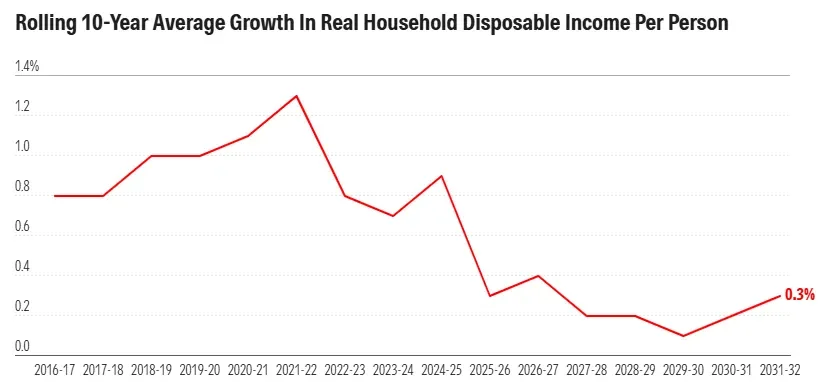
What does that mean?
Disposable income is what households have left after direct taxes. When adjusted for inflation, it helps us understand whether people can actually afford more with their money.
And the figures suggest that growth in our spending power has been remarkably weak.
The OBR also expects real household disposable income per person to be only around 2% higher by early 2032 than before the pandemic.
That’s why, although I support several measures in this Budget, I don’t think they go far enough.
A £100 energy payment or a temporary tax reduction can provide relief, but it doesn’t solve the underlying problem of weak income growth and rising living costs.
The government needs to create an environment where wages grow organically through higher productivity, housing becomes more affordable, businesses can thrive and, most importantly, more people have opportunities to build wealth.
For me, that’s the real measure of a successful Budget.
Not how much support the government announces, but whether people are genuinely better off and their quality of life improves.
❤️ The Bigger Lesson: Build Your Finances on Principles, Not Policies
Government policies will continue to change, and some of those changes will benefit us more than others.
We should take advantage of government support where it benefits us, but build our financial security in ways that don’t rely on it.
For example, saving consistently, diversifying our investments, developing our earning potential and preparing for uncertainty.
The strategies may change, but the principles remain.
Because financial security isn’t just about what the government does for you. It’s also about the decisions you make for yourself.