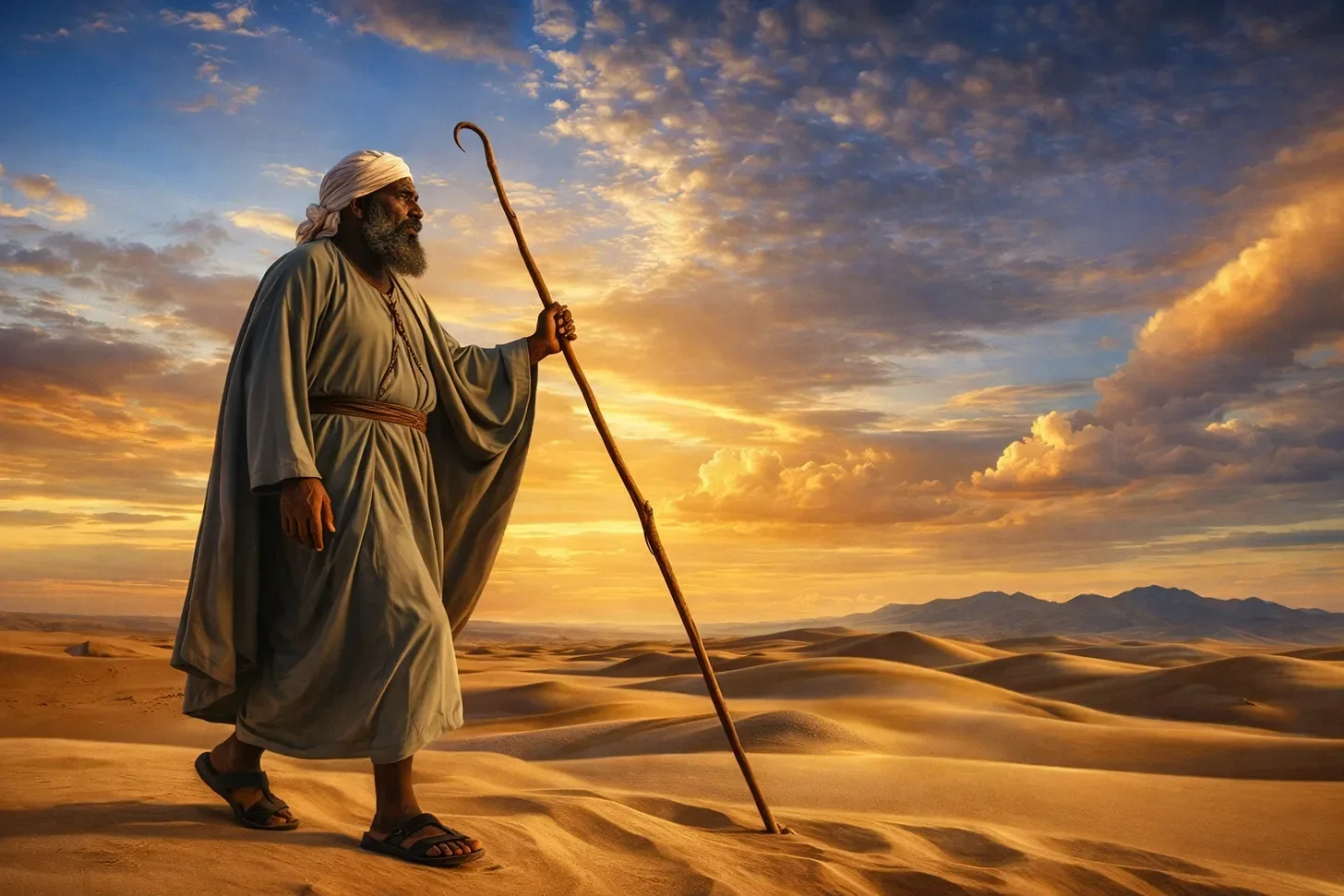
Let My People Go
The Cost of Living Inside a Broken System
The story of the Israelites leaving Egypt is one of the oldest stories of liberation.
It is also one of the most misunderstood.
Egypt represents oppression.
Not just a physical place, but a way of life defined by limitation.
The story of the Israelites leaving Egypt is one of the oldest stories of liberation.
It is also one of the most misunderstood.
Egypt represents oppression.
Not just a physical place, but a way of life defined by limitation.
Thanks for reading Money Matters with Toyosi! Subscribe for free to receive new posts and support my work.
Subscribe
When the Israelites finally left Egypt, oppression ended in form. But its effects did not disappear overnight.
📍 Geographically, the journey from Egypt to Canaan could have taken around eleven days. Instead, it took forty years because Egypt had not yet left them.
Leaving Without Changing 🚪
People can leave difficult environments and still carry those environments with them.
That is the risk of leaving without changing.
Most people experience an Egypt moment at some point in life. A season where circumstances limit growth, safety, or opportunity. Some leave quickly. Others stay longer than they should.
The deeper issue is not how long someone stays.
It is what they carry forward when they leave.
The Israelites left Egypt, but Egypt did not leave them.
Life in Between 🌵
That delay did not happen in isolation.
It unfolded in the desert.
The desert was not just a location.
It became the space between escape and arrival.
They moved, but not forward.
They travelled, but in circles.
Provision existed, but progress did not.
Hope appeared in moments, but direction was missing.
They were no longer enslaved, yet they were not yet free.
They lived in between.
This is what happens when external change is not matched by internal change.
Turning to Nigeria 🇳🇬
Nigeria has been in the headlines, not for growth or innovation, but for loss and instability. Problems that have existed for years are now receiving sustained attention.
Recent reports of U.S. military airstrikes in northwest Nigeria highlight a hard reality. A country of more than 200 million people needing external military support to manage its own internal security exposes a deeper problem.
It points to systemic failure.
Not the failure of one leader or one administration, but of structures that have struggled to convert size, talent, and resources into safety and stability for everyday people.
📖 This is why the words from Exodus resonate:
“I have seen the misery of my people. I have heard them crying out.”
Not because the situation is new, but because the attention is now unavoidable.
Talent Is Not the Problem ⭐⚽
Often described as the giant of Africa, Nigeria is rich in people and natural resources. Oil. Gas. Gold. Iron ore. Cocoa. Palm oil.
The issue is not talent.
It is not potential.
Individually, Nigerians succeed everywhere. In business, sport, medicine, technology, and culture. Excellence is not scarce.
The problem is coordination.
It is like watching a football team full of superstars that cannot win because they do not play together. On paper, they should dominate. In reality, individual brilliance does not automatically produce collective success.
A country does not win because a few players shine.
It wins when the system allows the team to function.
Nations struggle not because they lack gifted people, but because talent is scattered, misaligned, or absorbed by systems that do not reward shared progress.
A country succeeds when its people succeed together, not just in isolated pockets.
When Systems Fail Everyone 🚧
The tragic loss of two close friends of Anthony Joshua in a car accident received widespread media attention.
Not because road deaths are rare, but because this one was seen.
That is the point.
Broken systems do not discriminate.
Fame does not protect.
Success does not guarantee safety.
What unsettles people is not that accidents happen, but that the explanation feels familiar. Poor roads. Weak enforcement. Failures that could have been avoided.
When these outcomes feel normal, the problem is no longer individual behaviour.
It is the environment itself.
What Actually Changes Systems 🔑
Deep problems are rarely solved quickly.
And they are rarely solved by individuals acting alone.
But change often begins with individuals who understand the system and choose to challenge it.
Moses is a clear example.
He was raised in the Egyptian palace as a prince. He understood power, privilege, and how the system worked from the inside. Yet he could not ignore the burden of his people. He refused to benefit quietly from a system that oppressed others.
He was close enough to power to understand it, but connected enough to the people to confront it.
As Drake put it, “..to be far from hood, but to understand the streets”
These individuals still need support. Systems only change when enough people stop accepting what is broken and start demanding something better.
This applies beyond politics.
💰 If your money habits keep you stressed and stuck, change the system you live by.
🏥 If your health routines are failing you, change the patterns you have normalised.
🏠 If your environment is draining you, stop adapting to it and start reshaping it.
Broken systems survive when people learn to cope instead of confront.
Final Thought
You may not be able to change the world overnight.
But you can change the world you live in.
This year, dismantle the broken systems you have accepted in your own life.
Leave Egypt physically, mentally, and spiritually.
And step into your Promised Land, whatever that looks like for you.
That is the cost, and the reward, of refusing to live inside a broken system.