
Can You Actually Afford the Car on Your Drive?
The real cost of buying a car — and why thinking about it like an investor changes everything.
In the UK, homeownership is something close to a national obsession and for good reason. Property has been a source of wealth for generations, and for most households the mortgage or rent is the single biggest line in the monthly budget. Close behind it, transport and the car in particular consistently sits among the top three biggest household expenses. Yet it rarely gets the same careful thought.
You’re Borrowing Money to Buy Something That Loses Value 🚗
Here is the fundamental problem.
A house, a pension, an index fund.. these are assets that have historically grown over time. A car does the opposite. According to Motorway, the average new car loses 15 to 35% of its value in the first year alone. By year three, 40 to 60% of its value is gone. By year five, up to 70%. And yet, borrowing money to buy one has become one of the most normalised forms of debt in the country.
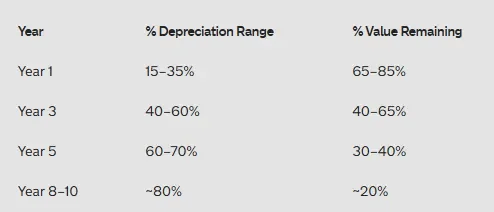
Data taken from January 2022 – July 2025
Car finance is big business. The vast majority of new cars in the UK are bought on some form of finance arrangement. Dealerships are, in many ways, financial businesses that happen to sell cars on the side and the margin on a finance product can exceed the margin on the vehicle itself. Understanding what these products truly cost is essential before you sign anything.
Stop Thinking About the Monthly Payment
The most expensive mistake buyers make is evaluating a car purely on the monthly cost.
“Can I afford £350 a month?” is a very different question from “Can I afford this car?”
Before signing anything, three questions are worth asking every single time:
What is the total repayment over the full term — not just the monthly figure?
What does the interest actually cost in pounds?
Do I own the car at the end of this agreement, or not?
There is also an opportunity cost that rarely gets mentioned. Commit £350 a month to car finance and that money cannot be invested elsewhere. Over four years, £350 a month at a modest 7% annual return. a reasonable long-run average for a diversified index fund — would grow to around £19,500. The interest you pay is not just a cost. It is also the return you are giving up somewhere else.
This is not an argument against owning a car but an argument for understanding the true price of the one you choose.
The Finance Options — What They Actually Mean
Personal Contract Purchase (PCP) 📋
PCP is the dominant car finance product in the UK, with industry estimates from ukcalculator.com suggesting it accounts for over 75% of all new car finance agreements.
The lender estimates what the car will be worth at the end of the deal — say £8,000 on a £20,000 car. You only borrow the difference, which is why monthly payments are lower. At the end you have three choices: hand it back, pay that £8,000 balloon to own it, or roll into a new PCP and start again. Most people roll — and never own anything.
On a £20,000 car with a £2,000 deposit over 48 months, monthly payments might be £275 to £325 (at 9% APR). But add up the deposit, payments, and balloon and the total can reach £24,000 to £25,000. Most people focus on the monthly figure and never do that sum.
Pros:
Lower monthly payments than hire purchase
Flexibility at the end of the term
Access to newer cars for less per month
Cons:
You do not own the car until the balloon is settled
Mileage limits apply — if you exceed them, you pay per mile
Easy to roll from one PCP into another without ever building equity
The balloon payment is often larger than people expect
Typical APR: 7% to 14% from dealer finance, depending on credit profile.
Hire Purchase (HP) 🔑
You pay a deposit then fixed monthly instalments. At the end of the term you own the car outright — no balloon payment. On the same £20,000 car with a £2,000 deposit over 48 months, HP typically costs around £456 per month at a representative 9.9% APR. Total repayment including the deposit comes to roughly £23,900 — more per month than PCP, but you own the car outright at the end with no lump sum surprise.
Pros:
You own the car at the end, no conditions
No mileage restrictions
Simpler to understand than PCP
Cons:
Higher monthly payments than PCP for the same car
You do not own the car until the final payment is made
Typical APR: 8.9% to 19.9% depending on lender and credit profile.
Personal Contract Hire (PCH) — Leasing 📄
You pay a deposit and fixed monthly rental for a set period, then hand the car back. You never own it.
Pros:
Lowest monthly payments of all options
Always in a new car with a manufacturer warranty
Road tax and often servicing bundled in
No depreciation risk or resale hassle
Cons:
No ownership or equity at any point
Strict mileage and condition requirements
Early termination penalties can be severe
The Option Worth Exploring Yourself: A Personal Loan 💳
Dealer finance is convenient, but convenience has a price. A personal loan from your bank will often cost you significantly less.
The lowest personal loan rates currently start at around 5.6% to 5.9% APR — compared to the 7% to 19.9% typical of dealer finance. On a £20,000 purchase, that difference can save you thousands over the term of the agreement.
The best starting point is a comparison site such as MoneySuperMarket, Compare the Market, or MoneySavingExpert, which run a soft credit check so you can see your likely rate without affecting your credit score. It is also worth checking your own bank directly — existing customers are sometimes offered preferential rates that do not appear on comparison sites.
With a personal loan you also own the car from day one — no mileage caps, no balloon, no condition inspection at the end. And you can negotiate on price, because to the dealer you are effectively a cash buyer.
Pros:
Often the lowest total interest cost for buyers with strong credit
Full ownership from day one
Negotiate as a cash buyer — can unlock a better price
No mileage limits, no balloon, no end-of-term conditions
Cons:
Best rates require excellent credit
No voluntary termination rights (unlike HP and PCP under the Consumer Credit Act)
Monthly payments higher than PCP as you repay the full amount
New vs. Used — The Depreciation Argument
The case for buying used comes down to depreciation. Buy two to three years old with a full service history and you let someone else absorb the steepest part of the curve — paying closer to a car’s real-world value rather than the premium attached to it being brand new.
One important caveat though: the used market is not quite the reliable bargain it once was. When the pandemic caused a global shortage of semiconductors — the microchips that modern cars depend on, new car production ground to a halt. With fewer new cars available, buyers turned to the used market, and prices surged. For example, a cars that would typically have sold for £8,000 were changing hands for £12,000 or more. Prices have come down since then, but the used market is still not as cheap as it once was. Do not assume second-hand automatically means good value, research matters more than it used to.
Should You Consider an Electric Car? 🔋
The environmental case for EVs is well established. The financial one is becoming harder to ignore but it is not just about running costs, it is about the full picture.
EVs typically cost 15 to 25% more to buy than a comparable petrol car. However, according to Just My Motorhome’s 2025 running cost breakdown, charging at home costs approximately £1,150 per year on average versus around £2,290 for a comparable petrol car — a saving of over £1,000 a year that over time can offset that higher purchase price. The catch is that if you rely mostly on public charging, those savings largely disappear as public charging typically costs three to five times more per mile than charging at home.
Pros:
Lower running costs — around £1,000 per year cheaper if you charge at home
Lower servicing costs — no oil changes, simpler drivetrain
Significant tax advantages for company car and salary sacrifice drivers (see below)
Cons:
Higher upfront purchase price than a comparable petrol car
EVs have historically depreciated faster than petrol cars, though according to Cox Automotive the gap is narrowing, which is worth factoring in if buying outright
Range and charging infrastructure still a consideration for long journeys
Company Cars and Salary Sacrifice — The Tax Angle 📊
If your employer offers a car benefit, the tax treatment for electric cars is worth knowing about. For many employees, particularly higher rate taxpayers, it can be one of the most cost-effective ways to drive a new EV.
When a company provides a car, you pay tax on it as a workplace benefit. For a petrol car that tax runs between 25% and 37% of the car’s value. For a fully electric car, the rate is currently just 4% meaning on a £35,000 EV, a higher rate taxpayer pays around £47 a month in tax versus around £350 a month for a petrol equivalent.
Salary sacrifice goes further. Your employer leases the car and you give up gross salary to cover it before tax is calculated which reduces both your income tax and National Insurance at the same time. On a £35,000 EV at £450 per month gross, the net monthly cost after tax savings drops to around £307, compared to £475 to £525 on a personal lease. Insurance, servicing, and road tax are typically bundled in too.
The tax rate on electric company cars is rising gradually from 4% now to 9% by 2029/30. Even at 9% it remains far below petrol rates. The window for the lowest rates is narrowing though, so if your employer offers the scheme, it is worth looking into sooner rather than later.
Pros:
Dramatically lower tax on EVs versus petrol company cars
Income tax and National Insurance savings through salary sacrifice
Insurance, servicing, and road tax typically bundled in
No deposit or credit check needed
Cons:
Only available through employers who offer it
Locked in for the lease term leaving a job mid-agreement needs careful handling
Mileage limits and condition requirements apply
Tax rate rises annually to 2030
So, Do You Actually Need One? 🤔
After working through all of the above, it is worth pausing before you commit to anything.
The options are plentiful: PCP, HP, leasing, a personal loan, salary sacrifice, new, used. Each has its place and the right one depends entirely on your situation, your mileage, your tax position, and how long you plan to keep the car.
But sometimes the most financially sound decision is the one nobody in a dealership will ever suggest. For urban households with good public transport, cycling or an e-bike covers a surprising amount of ground at a fraction of the cost. The Cycle to Work scheme even makes a quality bike tax-efficient. For households running two cars, the honest question of whether both are genuinely needed is worth at least ten minutes of your time.
If you do need a car, go in informed. Ask what the total cost is, not just the monthly figure. Understand what you are signing. And know that the most expensive car you can stretch to is rarely the right one.
Transport is one of the biggest financial decisions most people make. It deserves the same serious thought you give your rent or your mortgage.