6 Financial Principles From the Father of Faith
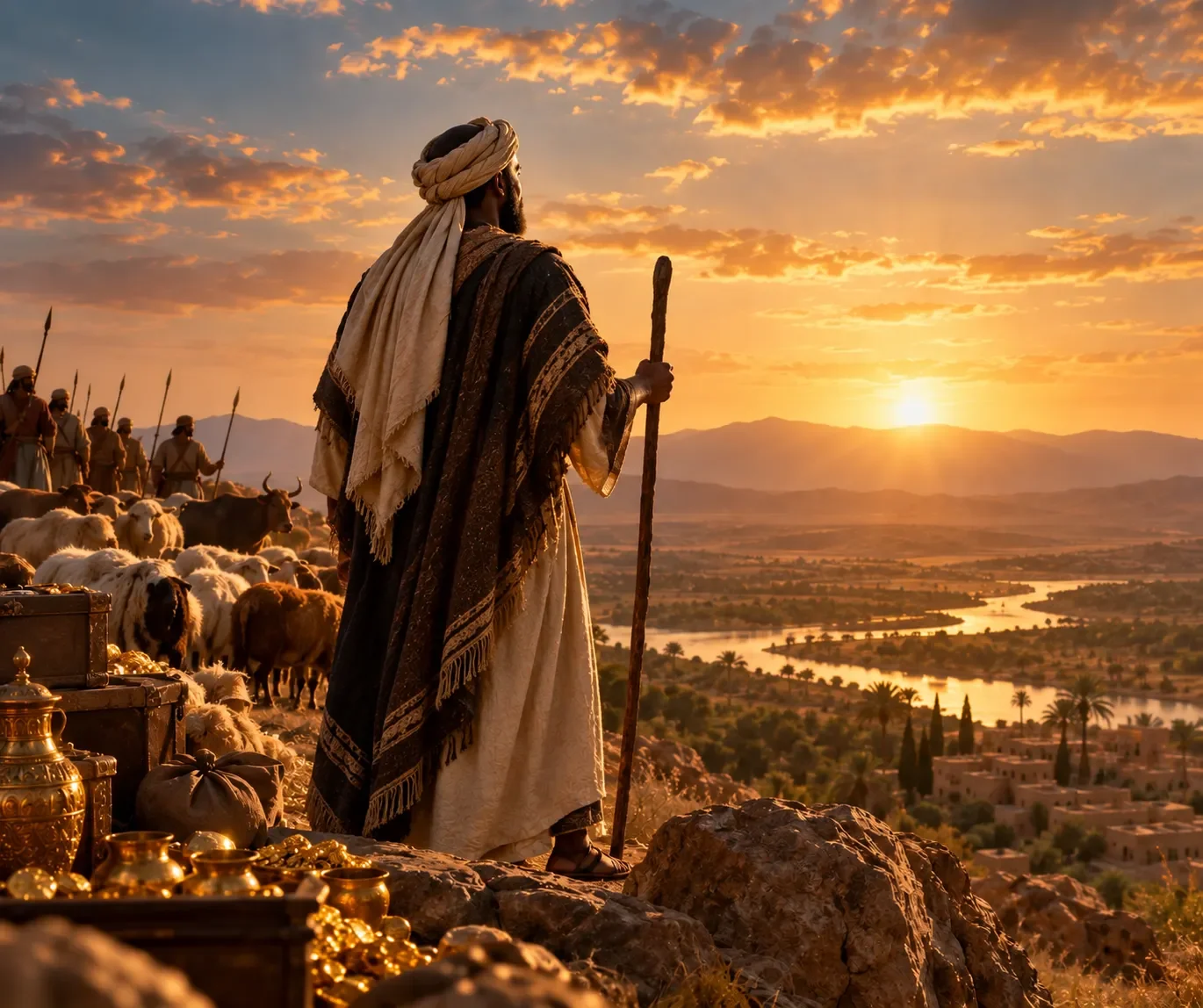
Abraham was a man of extraordinary faith. But he was also a man of extraordinary wealth.
Genesis 13:2 tells us:
“Abram had become very wealthy in livestock and in silver and gold.”
And we’re not talking about someone who simply owned a few sheep.
Abraham had livestock, silver, gold, servants and a substantial household. He interacted directly with Pharaoh and kings.
Later, when his nephew Lot was captured during a war involving several kings, Abraham took 318 trained men from his own household into battle and rescued him.
Think about the scale of that.
When was the last time you had an audience with a king, let alone enough people within your own household to back the beef against other kingdoms? 😂
Abraham was operating at a serious level of wealth and influence.
So what can his story teach us about wealth today?
🌍 First, Understand the Times
Abraham lived roughly 4,000 years ago.
There were no stock exchanges. No ETFs. No ISAs. No investment apps.
But the basic building blocks of wealth still existed.
People owned businesses and land, traded commodities, lent money and accumulated gold and silver.
What has changed dramatically is access.
Technology and modern financial markets have made investing far more accessible. Today, you can own a tiny piece of hundreds of companies through a fund or ETF, invest in government or corporate debt through bonds, or gain exposure to gold without storing bars yourself.
The building blocks of wealth aren’t necessarily new. The way we access them has evolved.
So rather than copying Abraham’s portfolio, let’s understand the principles behind his wealth and apply them today.
1. Turn Income Into Ownership
Notice how the Bible describes Abraham’s wealth.
It tells us what he owned.
Livestock. Silver. Gold.
It doesn’t tell us what Abraham earned every year.
You can earn £100,000 a year and still build very little wealth if everything you earn gets spent. Someone earning considerably less can gradually build wealth by consistently keeping and investing part of their income.
Earning a high income and having wealth aren’t the same thing.
Income is what comes in.
Wealth is what you build and accumulate over time.
So don’t only ask:
“How much do I earn?”
Also ask:
“What am I building with what I earn?”
2. Put Your Assets to Work
Abraham didn’t just own valuable things.
Some of what he owned could produce more.
His livestock reproduced. They could also provide food, materials and goods for trade.
In other words, Abraham owned productive assets.
A business can generate profits, some of which may be distributed to shareholders as dividends.
Property can generate rent.
Bonds can generate interest.
The principle is ancient: own assets that can produce.
What’s changed is that modern markets and technology have made it easier for more of us to participate.
3. Preserve What You Build
Genesis doesn’t only mention Abraham’s livestock. It specifically mentions silver and gold.
Gold plays a very different role from livestock.
It doesn’t reproduce. It doesn’t pay interest. It doesn’t pay a dividend.
So why have people valued it for thousands of years?
Gold has historically been used as a store of value. It’s scarce, globally recognised and, unlike pounds or dollars, can’t simply be created by a central bank.
That matters when we think about inflation and currency debasement.
£100 today doesn’t buy what £100 bought decades ago. Over time, inflation reduces the purchasing power of money, while currencies can also lose value as the supply of money increases.
Gold has therefore historically been viewed as a defensive asset, particularly during periods of inflation, geopolitical uncertainty and financial stress.
And here’s what I find fascinating:
Central banks still hold gold as part of their reserves today.
Even Bitcoin is sometimes described as “digital gold” because of its limited supply, although it’s much newer, more volatile and its long-term role is still debated.
The point isn’t “Abraham owned gold, so buy gold.”
It’s understanding why Abraham held it and why people still hold it today.
Building wealth is one challenge. Protecting what you’ve built is another.
Different asset classes have different roles in growing, generating income from and protecting wealth.
4. Protect Your Peace
As Abraham and his nephew Lot became wealthier, they ran into an unusual problem.
They had too much.
Their livestock and possessions had grown so large that the land couldn’t support both households, and their herdsmen started arguing.
Abraham could have fought for the best land.
Instead, he told Lot:
“Let there be no strife between you and me.”
Then he let Lot choose first.
Lot chose the well-watered Jordan Valley. Looking at the opportunity in front of them, it appeared he had secured the better deal.
But Abraham chose peace over winning the negotiation.
Not every profitable deal is a good deal if it costs you your peace.
The highest-paying client isn’t always the best client. The business partnership with the biggest financial potential isn’t automatically the right partnership.
Sometimes walking away from conflict isn’t losing.
You don’t have to win every deal to win financially.
5. Build Beyond Yourself
Remember those 318 trained men Abraham took into battle?
They tell us something else about his wealth.
Abraham had built something much bigger than himself.
These men were already part of his household and had been trained. And they were only the men who went to fight, not necessarily everyone connected to his household.
Abraham had built a network of people and resources that allowed him to achieve far more than he could alone.
That’s leverage.
Today, leverage can come through people, technology, systems or capital. Each can allow you to achieve more than your individual time and effort would allow.
There are only 24 hours in your day.
Building leverage allows your impact to extend beyond them.
6. Know Where Your Security Comes From
After Lot made his choice and left, God spoke to Abraham:
“Look around from where you are, to the north and south, to the east and west. All the land that you see I will give to you and your offspring forever.”
Lot got first choice of the land.
But Abraham had the promise.
Throughout this article, we’ve looked at Abraham’s livestock, gold, workforce and other resources. But the biblical account doesn’t present any of these as the ultimate source of his security.
Abraham believed God was.
Genesis 15 captures that relationship:
“Do not be afraid, Abram. I am your shield, your very great reward.”
Which leaves an interesting question:
What is your security built on?
Money can provide options. Assets can generate income. Wealth can create financial security.
But Abraham’s story reminds us that our net worth doesn’t have to become our self-worth.
Abraham was incredibly wealthy.
But his greatest wealth wasn’t something you could put on a balance sheet.