How to Find a Side Hustle That Works for You💰
Using Ikigai to Turn Ideas Into Income
Most people don’t think about starting a side hustle unless something isn’t working.
For some, it’s financial pressure. A salary that looks fine on paper but disappears by the middle of the month. Debt to clear. A house deposit to save for. A wedding, a holiday, or simply trying to live without relying on a credit card.
At some point, a hard truth shows up:
Your 9–5 isn’t quite cutting it.
And you’re not alone.
For others, it’s a deliberate choice. The appeal of building multiple income streams, having more flexibility, and gaining more control over their time and money.
Either way, side hustles have become far more mainstream.
Not because everyone wants to be an entrepreneur, but because the old economic model has changed. Jobs feel less secure, careers are no longer linear, and it’s now common for people to change jobs and even industries several times over their working lives.
The real question isn’t should you start a side hustle?
It’s what kind of side hustle could actually work for you?
Why choosing a side hustle feels so overwhelming 😵💫
The challenge isn’t a lack of ideas. It’s the opposite.
You’re surrounded by so many options and advice. One minute it’s dropshipping, the next it’s building a personal brand or automating something online. Everyone has an opinion on what you should do, and most of them sound convincing.
In many cases, the simplest place to start is close to what you already do. You don’t need to reinvent the wheel. You have a track record, and often your employer has already invested in your skills. Building from there is often quicker and easier to execute.
That said, some people want to do something different from their main job. Maybe for variety, flexibility, or because they don’t want their income tied to one place. Either way, the challenge is the same: knowing which ideas are worth your time and which ones are just noise.
That’s why having a clear way to filter ideas matters.
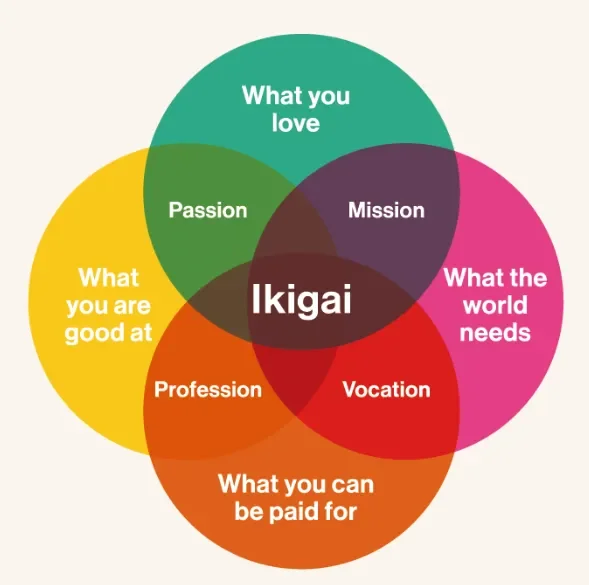
Ikigai: a smarter way to think about your side hustle 🧭
Ikigai (pronounced ee-kee-guy) is a Japanese concept that means “a reason for being” or, more simply, a reason to get out of bed in the morning.
It’s built around four questions:
What do you enjoy?
What are you good at?
What does the world actually need?
What can you get paid for?
When these overlap, you’re far more likely to build something that lasts, not just something you abandon after three months.
The four questions that help you find a side hustle that fits
1️⃣ What do you enjoy?
This is about energy.
What topics keep pulling you back in? What do you find yourself researching, watching, or talking about without being forced? What could you stay curious about for years, not weeks?
You won’t love every task, but if you enjoy the core idea, you’ll survive the boring bits.
Ask yourself:
What makes time fly for me?
What problems do I like thinking about?
What would I still be interested in even if results came slowly?
2️⃣ What are you good at?
You already have strengths you can build on, even if you don’t see them yet.
Some of these come from what you’ve learned over time. Others come from how you’re wired, the way you think, communicate, or solve problems. You can always learn new skills, but building on your natural strengths is usually faster and far less draining.
Ask yourself:
What do people come to me for?
Where do I pick things up quicker than most?
What feels “normal” to me but impressive to others?
The goal isn’t perfection. It’s alignment.
3️⃣ What does the world need?
This is where ideas get real.
You can enjoy something. You can be good at it. But if no one needs it, you don’t have a side hustle. You have a hobby.
This is market research.
Ask yourself:
What problem does this solve?
Who is this actually for?
Does this create real value for someone in a way that genuinely makes their life better?
Side hustles work when they create value outside of you.
4️⃣ What can you get paid for?
This part matters more than people like to admit.
If money never comes in, the side hustle won’t last. Earning from your work is what makes your efforts sustainable.
Ask yourself:
Are people already paying for this, and how does money actually flow in this space?
Could this become profitable as your skills improve, your offer becomes clearer, or it reaches more people?
Is there a clear and realistic way for you to charge for the value you’re creating?
How these questions work together 🔗
When you start combining the four Ikigai questions, this is what each overlap points to:
What you enjoy + what you’re good at = work you’re naturally drawn to
What you enjoy + what the world needs = work that feels meaningful
What the world needs + what people will pay for = something people will actually pay for
What you’re good at + what people will pay for = something you can build credibility and momentum around
The strongest side hustles sit where several of these come together, ideally all four.
One important thing to keep in mind is this:
none of this is fixed.
Your side hustle will change and that’s normal 🔄
We’re living in a fast-moving world.
Few people saw the 2020 pandemic coming. Businesses that survived weren’t necessarily the best. They were the ones that adapted.
Take Uber. When travel collapsed, ride-hailing dropped. Focus shifted to Uber Eats. Same company. Same assets. Different demand.
Your side hustle will go through the same thing:
Your skills will improve
The market will change
Your priorities will shift
What works at the start won’t always work later.
Expect bumps. That’s part of the deal ⚠️
There will be slow months. Bad ideas. Awkward launches. Crickets where you expected sales.
That doesn’t mean you’re not cut out for this. It might just mean you need to learn, adjust, and try a different approach.
Anything worth doing is worth starting badly. Momentum beats perfection every time.
Be bold. Progress rewards action.
Welcome to the journey 🚀
A side hustle isn’t just about extra cash.
It’s about ownership, options, and control.
It also doesn’t have to be the end goal. Often, it’s a starting point. A way to test ideas, build skills, and see what actually works.
And if it doesn’t work out, that doesn’t mean it was a waste. What you learn along the way often leads you to the next, better thing.
Use Ikigai as a filter, stay curious like a scientist 🧪, and give yourself permission to evolve.
This is how you find a side hustle that works for you.